Explore the rich and varied birding opportunities across Vietnam by understanding how seasons shape birdwatching in the north, central region and south. Whether you’re chancing rare endemics or migratory shorebirds, timing matters. Here’s your complete guide.
1. Why Seasons Matter for Birdwatching in Vietnam
Vietnam spans a long north-to-south gradient, and each region has distinct climate, habitats and migratory patterns.
- The dry vs rainy seasons affect access, bird activity and visibility.
- Migratory birds pass through or winter here — e.g., shorebirds in the north and wetlands, tropical forest specialists in highlands.
- Resident species often breed or become more vocal in the dry/cool season, making detection easier.
Understanding the seasons means better planning: when forests are less drenched, when access roads aren’t flooded, when birds are active rather than hidden.
2. Northern Vietnam – Best Birding Window & Key Notes
Climate & Seasons
- In the north, the cool dry season runs roughly October/November to April. Rainfall ramps up from May and peaks in summer (July-September) in many parts.
- During the dry season, temperatures are cooler, especially in uplands; bird activity tends to be higher and trails more accessible.
- The early wet season and mid-summer can bring heavy rains, fog, leeches, and lower visibility.
Birding Highlights & Ideal Timing
- The best months for northern birding: December to April. Tour operators frequently cite this window.
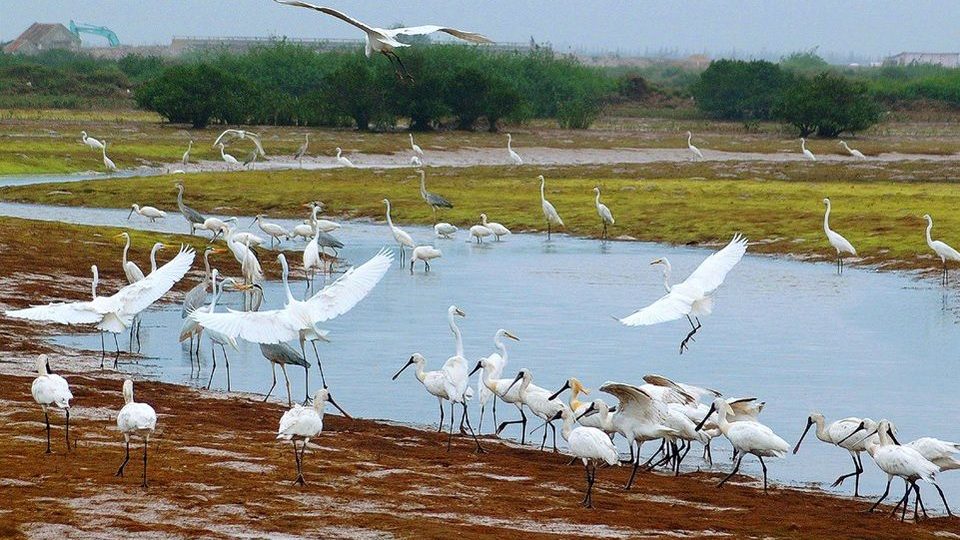
- For seeing wintering and migrating waterbirds (e.g., coastal reserves), November to early February is strong.
- For resident forest species (laughingthrushes, pittas, partridges) active in breeding or dawn-chorus, late February to April is especially favourable.
Key Regions & Species
- Cúc Phương National Park & Tam Đảo National Park near Hanoi are prime for forest endemics.
- Xuân Thủy National Park on the coast is a hotspot for migrating shorebirds.
Practical Tips
- Arrive early in the morning (dawn or just after) when birds are most active.
- In the uplands expect chillier conditions—bring warm layers and waterproof gear.
- Avoid the peak monsoon months (July–September) for birding in the north; many activities are disrupted.
3. Central Vietnam – Intersection of Habitats & Seasonal Complexity
Climate & Seasons
- Central Vietnam’s pattern differs a bit: the lowlands tend to be hot and dry from January to August, with heavier rainfall (often typhoon-associated) from October–November.
- In mountain or highland parts of the central region, the patterns of humidity and rain differ again with elevation.
- For many birding sites in central Vietnam, the prime window for visitation is December to May.
Birding Highlights & Ideal Timing
- If you aim to visit places such as Phong Nha‑Kẻ Bàng National Park, Bạch Mã National Park or highland habitats: February to April often gives comfortable conditions and high bird activity.
- Early in the dry season is good; late dry season can be very hot, and the start of heavy rains (October/November) is less ideal.
Key Regions & Species
- The Annamite mountain chain and surrounding forests are home to regional specialities and forest-endemic birds.
- Coastal areas around Da Nang, Hue and the central highlands bring mixture of forest and shore/sea-bird opportunities.
Practical Tips
- Be flexible: The central region can “flip” quickly from dry to rainy (or typhoon-risk) months.
- If you’re birding in highlands, check for weather and road access (some tracks may become slippery or impassable once rains begin).
- Consider including a mix of lowland forest + montane forest + coastal wetlands if your schedule allows — this region spans many habitat types.
4. Southern Vietnam – Dry Season, Wet Season & Best Birdwatching Windows
Climate & Seasons
- In the far south, the seasons tend to be simpler: a dry season roughly November to April, and a wet/rainy season from May to November.
- Temperatures stay fairly warm year-round; humidity and rain variability are the main factors for birding ease.
Birding Highlights & Ideal Timing
- The top birding months in the south: November to April, when conditions are drier and access is better.
- For wetlands and shorebirds in the Mekong Delta region, the earlier part of the dry season (December–March) is especially good.
- In mountainous southern areas (e.g., Đà Lạt Plateau), the season may extend into May or June before rains disrupt tracks.
Key Regions & Species
- Cát Tiên National Park is one of the pre-eminent lowland forest sites near Ho Chi Minh City with many sought-after bird species.
- The Mekong Delta wetlands (e.g., Tràm Chìm National Park) host large numbers of waterbirds and migratory species in the dry season.
Practical Tips
- Be wary of midday heat: in the dry season the sun can be strong and birds may be less active in the hot hours. Early mornings are best.
- During the wet season many tracks may be waterlogged or flooded, and bird-activity may still be good but logistics harder — if you’re restricted in time, favour dry season.
- Southern birding can be combined with cultural/wetland tours (boat trips in the Mekong) for a richer experience.
5. Putting It All Together: When to Go & Planning Tips
When should you visit if…
- You want to cover all three regions: A good overall window is late January to April — north still in dry/cool, central trending dry, south in dry season.
- You’re focused on migratory/shorebirds: Target November to February, especially coastal/mangrove zones.
- You want forest endemics in upland or montane areas: Consider February–April for clearer conditions, active bird sounds and manageable weather.
- You have more flexibility: Then you could even plan region-specific visits, for example:
- North: December–March
- Central: December–May
- South: November–April
General Gear & Logistics Tips
- Arrive at birding sites at dawn—many species are most active then.
- Wear long sleeves, long pants, insect repellent (leeches and mosquitoes can be an issue in forests) — the dry season helps, but forest habitats still have challenges.
- Use a local guide: many of the forest-dwelling species are shy, hard to spot, and local guides know their calls and habits.
- Check regional weather and road access: especially in central Vietnam where typhoons/rainstorms may hit late in the year.
- Consider combining habitats: lowland + montane + wetland, to maximise species diversity.
- Respect ethical birding practices: keep distance, minimise disturbance of habitat and birds, avoid unnecessary playback calls.
6. Final Thoughts
Vietnam offers a fantastic mix of birding experiences — from migratory shorebirds on coastal wetlands to rare forest endemics high in the mountains. By planning your visit around regional seasonal windows, you’ll greatly increase your chances of a rewarding trip.
If I were to pick one single “sweet spot” period, it would be February to early April, when the north is dry/cool, central is good, and south is still in its dry season. But if your interest is very target-specific (e.g., wetland birds in the south, or upland species in the north), the regional windows above will help you fine-tune your itinerary.